Test Prep

Charlotte Latin School Student Increases SAT Score by 240 Points

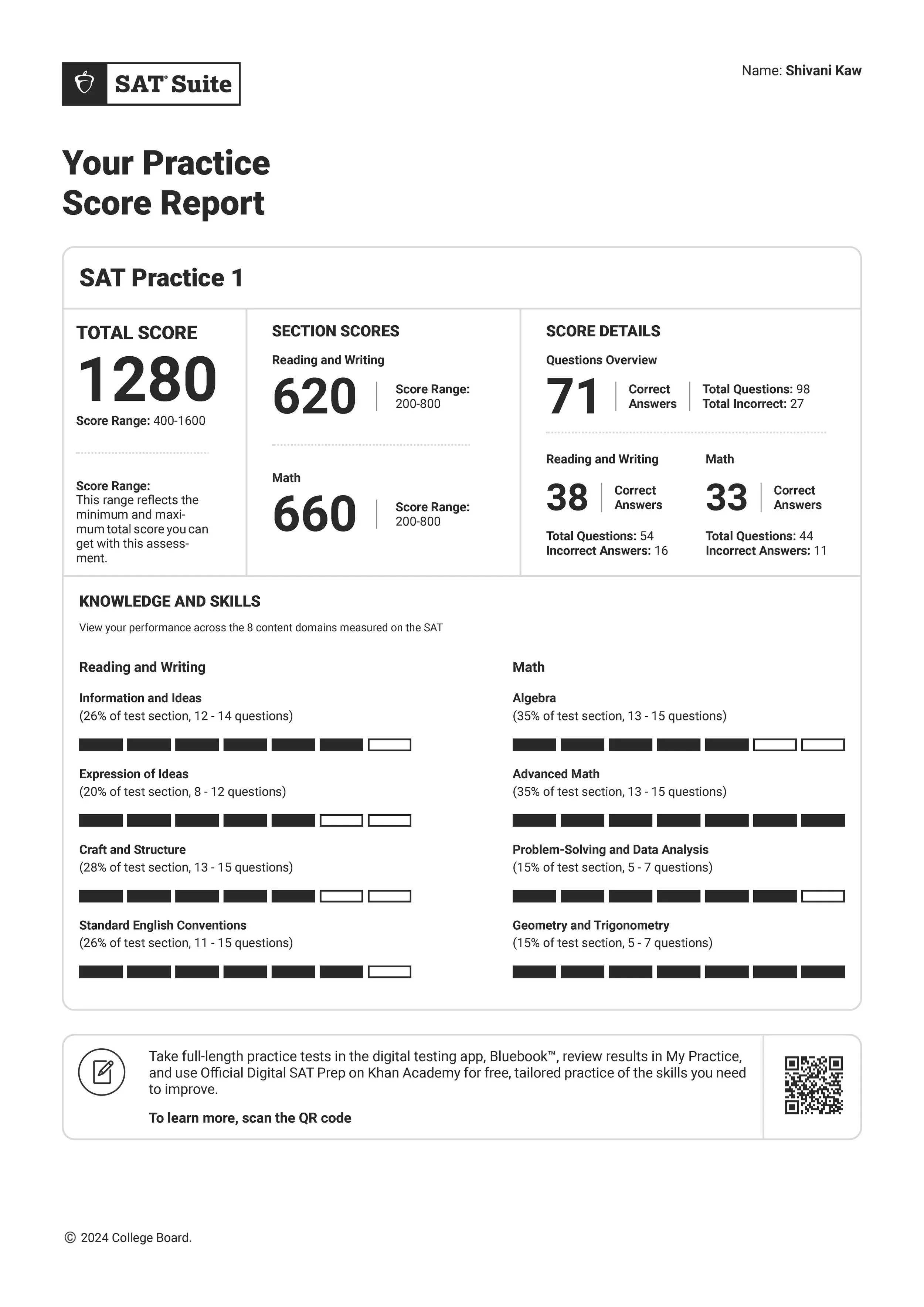
Shivani Kaw came to Vint Hill Educational Services for SAT prep in June 2025. She started with a baseline SAT score of 1280. We paired Shivani up with VHES all-star tutors Danielle Levin and Wren Miller. Shivani started with a 660 on SAT math and a 660 on SAT reading/writing. She completed a mock SAT administration at our office in Ballantyne. After completing our 36-session SAT prep package, Shivani went up 240 points on the SAT and scored a 1520 on the March 2026 SAT! She had a 790 in SAT math and a 730 in SAT reading/writing.

Congratuations to Shivani, Danielle, and Wren!


SAT Patterns You Should Pick Up On

🧩 Patterns You Should Notice 

The SAT Loves “Almost Right” Answers

One of the biggest patterns on the SAT is:

 Wrong answers are often partially correct—but not completely correct.

What this looks like:
An answer that matches the passage but twists one detail

A math answer that comes from a small calculation mistake

A grammar choice that sounds right but breaks a rule
 

Example (Reading):
The passage says a character feels “uncertain but hopeful.”
A trap answer might say: “completely confident about the future.”

 It’s close—but not accurate.

 What to do instead:

Double-check that every word in the answer matches

Be careful of answers that feel “kind of right”

If even one part is off → eliminate it

 Key Rule:
On the SAT, answers are either completely right or completely wrong—there’s no partial credit

Student Increases SAT Score by 290 points

Student Increases SAT Score by 290 points

A local student in Virginia increased his SAT score by 290 points using Vint Hill's one-to-one SAT prep program.

Achieving a Good Score on the SAT

Achieving a Good Score on the SAT

The SAT, or Scholastic Aptitude Test, is a standardized test administered by the College Board. U.S. colleges widely use it as one piece of their admissions processes, along with GPA, course rigor, letters of recommendation, essays, special talents like athletics and music, and other factors. 

Achieving a good score on the SAT can make you a competitive applicant for top universities, increase your chance of acceptance, and improve your scholarship chances. So, even though some schools are test-optional, taking the SAT can still help your application stand out.  

Mastering the AP Maze: Navigating College Credits

Mastering the AP Maze: Navigating College Credits

Advanced Placement (AP) tests have become a cornerstone of the high school experience for many students aiming to challenge themselves academically and gain college credit. Administered by the College Board, AP exams cover a wide range of subjects and offer students the opportunity to showcase their proficiency in college-level coursework. However, understanding how AP tests can translate into college credits can be a significant factor in a student's academic planning.

Top 7 Tips for SAT and ACT Testing: Your Ultimate Schedule

Top 7 Tips for SAT and ACT Testing: Your Ultimate Schedule

By following these seven tips and creating a strategic schedule for SAT and ACT testing, you can approach the exams with confidence and maximize your chances of success. Remember to stay focused, stay motivated, and trust in your preparation efforts. You've got this!

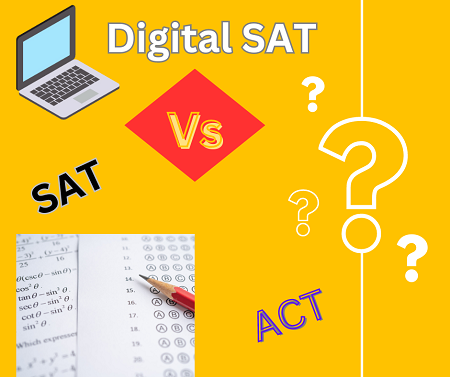
Choosing Between the Digital SAT and ACT: What You Need to Know

Choosing Between the Digital SAT and ACT: What You Need to Know

Starting in March 2023, the SAT is set to transform into a shorter, snazzier digital test. This development is causing quite the buzz, especially for high school juniors (Grade 11). Typically, strong math whizzes have thrived on the SAT, while those leaning towards reading and verbal skills have found their stride with the ACT. However, with the digital shift, SAT takers now need to excel across the board.There's also the option of ditching the SAT altogether and channeling their efforts into the ACT.

5 Tips for AP Course Success

5 Tips for AP Course Success

Whether you’re a veteran AP student, or taking a course for the very first time, know that the work you do in an AP course will help you prepare for college and beyond. Read on for ive tips and other free resources to keep in mind as you gear up for your next AP course.  

Sleep and Health

Sleep and Health

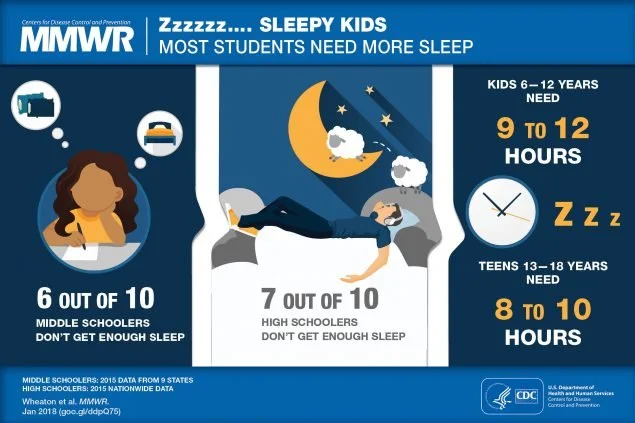
Adequate sleep contributes to a student’s overall health and well-being. Students should get the proper amount of sleep at night to help stay focused, improve concentration, and improve academic performance.

Children and adolescents who do not get enough sleep have a higher risk for many health problems, including obesity, type 2 diabetes, poor mental health, and injuries. They are also more likely to have attention and behavior problems, which can contribute to poor academic performance in school.

Going To College Pays, But Elite Colleges Pay Even More

Going To College Pays, But Elite Colleges Pay Even More

he benefits of a four-year degree are substantial and solid. Getting a college diploma will likely be the best investment anyone ever makes.

Not to brag too much, but some of us have been saying this for a long, long time.

But there’s more to the simple value of a college degree, undeniable as that is. That’s because finishing school matters, but where you finish school matters even more.

Junior Year Testing Timeline

Junior Year Testing Timeline

Here's a breakdown of a traditional timeline for junior year, focusing on the PSAT, SAT, and/or ACT, with suggestions for tutoring and goal planning:

September:

- Start by familiarizing yourself with the test formats and content of the PSAT, SAT, and ACT.

- Consider taking a diagnostic test to assess…

Top 11 Tips for Back to High School

Top 11 Tips for Back to High School

Heading back to high school? Whether you’re a high school junior or a senior these tips will help you quickly get into gear for fall semester in terms of your classes, the college admissions process, test prep and, of course, your scholarship search. Yes – there’s a lot to remember – but these tips will help you keep everything on track all semester long by starting out organized, with a plan and with right goals in mind.

What is the Submitter Advantage?

What is the Submitter Advantage?

Colleges universally adopted test optional admissions policies during the pandemic, in part because a handful of national SAT and ACT test dates and a flood of local test center administrations were cancelled. Test optional admissions also served to lower anxiety during a time when both applicants and the schools themselves were panicked about COVID-college. The general public became enamored with rhetoric about how removing objective data somehow produced fairer outcomes. However, feelings among applicants and their parents about test optional admissions have become more mixed as people have had time to consider its implications.

What To Do Summer Before Junior Year of High School

What To Do Summer Before Junior Year of High School

Don’t know what to do summer before junior year of high school? Here are 10 awesome ideas to give you a head start!

6 Summer Tips to Prepare you for College

6 Summer Tips to Prepare you for College

College can be demanding, so it’s essential to take advantage of the summer months to prepare yourself. From relaxing and recharging to getting organized and networking, these tips will help you make the most out of your summer break. By the end of it, you’ll have boosted your skills, made some valuable connections, and set yourself up for success.

AP Scores: What Next?

Advanced Placement (AP) courses are rigorous academic courses offered to high school students which are designed to prepare students for college-level coursework, and successful completion of an AP course may result in earning college credit or advanced standing at participating colleges and universities. After completing the AP exam at the end of the course, students receive a score ranging from 1 to 5. A score of 3 or higher is generally considered a passing score, and many colleges and universities grant credit for scores of 4 or 5.

If you have recently received your AP scores, you may be wondering what to do with them. Here are some things to consider:

Determine your college goals.

If you are planning to attend college, it's important to consider your college goals when deciding what to do with your AP scores. Are you hoping to attend a highly selective college or university? Do you have a particular college or university in mind? Different colleges and universities have different policies regarding AP credit, so it's important to research the policies of the schools you are interested in attending. Some schools may require a minimum score of 4 or 5 to grant credit, while others may only grant credit for certain AP courses. Additionally, some schools may only grant credit for AP scores earned during your senior year of high school.

Research the AP policies of colleges and universities.

Once you have determined your college goals, it's important to research the AP policies of the colleges and universities you are interested in attending. Many schools publish their AP policies on their websites, and some schools may also provide this information to prospective students during campus visits or information sessions. It's important to note that AP policies can change from year to year, so it's a good idea to check for updates regularly.

Consider the potential benefits of AP credit.

Earning college credit through AP exams can have several benefits. First, it can allow you to graduate from college early or to take fewer classes each semester, which can reduce the overall cost of college. Additionally, it can allow you to take more advanced courses in your major or to pursue a second major or minor. Finally, earning AP credit can demonstrate to college admissions officers that you are capable of handling college-level coursework.

Consider the potential drawbacks of AP credit.

While earning college credit through AP exams can be beneficial, there are also potential drawbacks to consider. First, not all colleges and universities grant credit for AP scores, so it's important to research the policies of the schools you are interested in attending. Additionally, some schools may only grant credit for certain AP courses or may require a minimum score of 4 or 5. Finally, earning AP credit may not necessarily mean that you are fully prepared for college-level coursework in that subject area, so it's important to continue to study and to seek out additional resources if necessary.

Decide whether to send your AP scores to colleges and universities.

After considering your college goals, researching AP policies, and weighing the potential benefits and drawbacks of AP credit, you can decide whether to send your AP scores to colleges and universities. The College Board, which administers the AP exams, allows students to send their scores to up to four colleges or universities for free. After that, there is a fee for each additional score report. If you are unsure about whether to send your scores, you can wait until you have been accepted to a college or university and then decide whether to send your scores at that time.

Determine whether to retake the exam.

If you did not receive a passing score on the AP exam, you may be wondering whether to retake the exam. The College Board allows students to retake exams in future years, and some schools may allow students to retake the exam during the same year. Before deciding whether to retake the exam, it's important to consider whether you have the time and resources to prepare for the exam again. Additionally, you may want to consider whether the college or university you are interested in attending grants credit for AP scores earned during a retake.

Seek advice from your high school guidance counselor.

Your high school guidance counselor can be a valuable resource when it comes to deciding what to do with your AP scores. Counselors can provide information about college and university AP policies, as well as offer guidance on how to interpret your scores and how to prepare for retakes if necessary. Additionally, your guidance counselor may be able to provide recommendations for additional resources or support if you are struggling with a particular subject area.

In conclusion, deciding what to do with your AP scores requires careful consideration of your college goals, research into college and university AP policies, and weighing the potential benefits and drawbacks of AP credit. Whether you decide to send your scores to colleges and universities, retake the exam, or seek advice from your high school guidance counselor, it's important to remember that your AP scores are just one factor in the college admissions process and do not define your academic potential or success. With the right resources and support, you can continue to pursue your academic goals and succeed in college and beyond.

PERSONALIZED PROGRAMS

Vint Hill Educational Services was designed to provide students with a one-to-one, customized, and supportive tutoring experience, taking into account each student’s skills, challenges, goals, and learning styles. Due to our individualized approach, VHES has demonstrated success in helping students increase their test scores, improve their grades, and adjust to the increasing demands of academia. Our tutors work closely with families to develop the most appropriate lesson plans, focus on the most relevant material, and modify services as needed to ensure that students meet their educational objectives.

MULTI-SERVICE AGENCY

Whether a student needs help preparing for exams, making sense of course material, or just getting organized for school, VHES offers specialized services to address each student’s academic needs. These services include Test Prep, Subject Tutoring, Mock Testing, Academic Coaching, and College Planning and Preparation. We also offer a hybrid package that allows students to receive both tutoring and coaching services concurrently. This is a great option for those who need more than just help understanding content or keeping up in class. Tutoring hours are also transferrable if students would like to switch to another service.

FULL-SCALE DIAGNOSTIC REPORTS

Our test-prep program includes a full diagnostic report that shows how the student is performing in each dimension of standardized tests such as the ACT, SAT, SSAT, ISEE and HSPT. This detailed report is the basis for test-prep planning and instrumental in helping us customize a tutoring program that addresses the most pertinent test sections. For students taking both the ACT and SAT, we also provide a concordance chart with test recommendations. In addition, VHES offers students the option to take a practice test at home, in a group setting, or individually with one of our proctors.

CONVENIENT SCHEDULING

We arrange sessions to suit each student’s schedule and preferred location. Most students choose to meet with their tutor in the home once or twice a week, but sessions can also be held at a public library, a local coffee shop, or our office locations if the home is not the best option. Our tutors work directly with parents to arrange sessions that work best with the student’s schedule.

QUALITY TUTORS WITH RELEVANT EXPERIENCE

All VHES tutors are required to have a minimum of a bachelor’s degree and to demonstrate content knowledge by passing multiple subject-specific diagnostic tests. We hand select the best tutor based upon the student’s needs and personality style, and parents will receive the tutor’s profile for review and approval. This profile includes the tutor’s experience, education, background, and approach to helping students succeed. Whether a student wants to brush up on a few concepts or needs intensive instruction in a particular subject, we strive to create an optimal tutor-student fit that is conducive to improved scores and school performance.

ALL-INCLUSIVE AND FLEXIBLE PACKAGES

VHES offers flat-fee packages with no gimmicks or hidden costs. Each of our test-prep packages includes a baseline practice test, a full set of course books, weekly homework, access to our Teachworks parent portal, and session notes that detail the progress your child is making throughout the program. Extra sessions can be added to any of our packages, while tiered discounts are available for students who need long-term tutoring.

RESULTS!

Most importantly, VHES has demonstrated success in helping students reach and exceed their academic goals. We track our students’ scores to ensure improvement and modify programs as needed to resolve any ongoing challenges. Our most recent performance evaluation shows that overall our test-prep students are approximating score increases of 130 total points for the SAT and 4.5 composite points for the ACT. Moreover, our programs equip students with valuable, practical, and long-term skills such as strategizing their approach to exams, optimizing their learning style, studying more proficiently, and managing their time more effectively. We at VHES take pride in the efficacy of our services and the progress of our students.

Digital SAT Brings Student-Friendly Changes to Test Experience

Digital SAT Brings Student-Friendly Changes to Test Experience

In early 2022, The College Board announced plans to shift the SAT to a computer-based format. The pencil-and-paper version will be retired and students will eventually only be able to take the test digitally (unless they need accommodations that require a physical version of the test). Moreover, the new SAT will be adaptive — the content of the test will adjust according to each student’s performance within the first module.

The SAT® Test Goes Digital: What to Expect in 2023-2024

The SAT® Test Goes Digital: What to Expect in 2023-2024

College Board announced in early 2022 that it will offer the PSAT/NMSQT® and SAT® tests digitally starting in 2023 and 2024. Over the last 30 years Vint Hill Educational Services has seen numerous adjustments, reconstructions, and make-overs by College Board. With each change we have adapted and found new and improved ways to prepare our students.

Education is a Gift

Education is a Gift

Teachers, tutors, trainers, and coaches have been giving the best possible gifts all year. Education is a gift that none can take away. It increases in value over time and compounds exponentially when shared. Plus, you don't have to worry about where to store it.

Your SAT Score Report Explained

Your SAT Score Report Explained

The top portion of your score report contains a big black number. This is your SAT Score, also referred to as your total score. Next to your score are the numbers 400–1600, indicating that the range of possible scores on the SAT is 400–1600. To the right of your total score is your score percentile, telling you what percentage of students who took the test did better or worse than you. In small type below your score is your Score Range…